

Time to Play
Behind the scenes with intentional camera movement

“Deep play arises in such moments of intense enjoyment, focus, control, creativity, timelessness, confidence, volition, lack of self-awareness (hence transcendence) while doing things intrinsically worthwhile, rewarding for their own sake…It feels cleansing because when acting and thinking becomes one, there is no room left for other thoughts.”
― Diane Ackerman, Deep Play
I have been having a lot of fun with experimental, abstract techniques for landscape images this year (you can see more on my Instagram), and several photographers have asked me recently about how I create those images. I thought it would be a good topic for a newsletter, especially since the low light of winter is the perfect time to play with techniques that require a slow shutter (a neutral density filter can assist on brighter days). Some parts of this essay are a bit technical, but I hope the discussion and the images will be interesting for photographers and non-photographers alike.
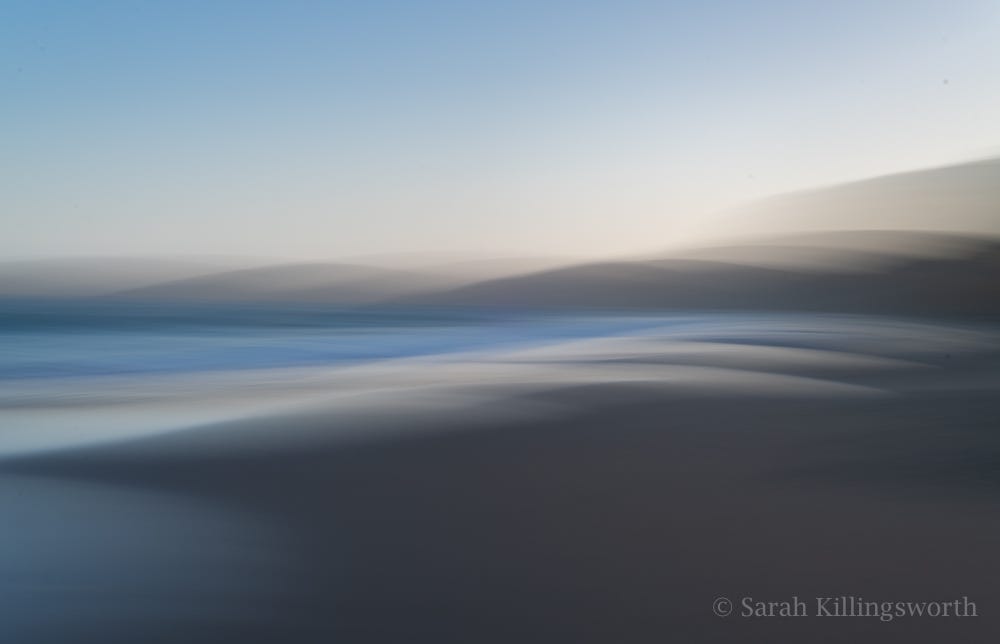
I sometimes find myself feeling photographically stuck in a rut, uninspired or worn out. And my strategy for these periods is to pause what I am working on and shift to experimentation. I love trying different techniques which may have low “keeper” rates but are immensely satisfying when the elements come together, when I create something that feels unique.
There’s that old saying, that you have to learn the rules to break them. And I think that’s a trajectory many photographers go through (I certainly did). First, I learned the basics of the camera and all the settings. Then I dove deep into composition and post-processing. And then I was eager for a new photographic challenge.
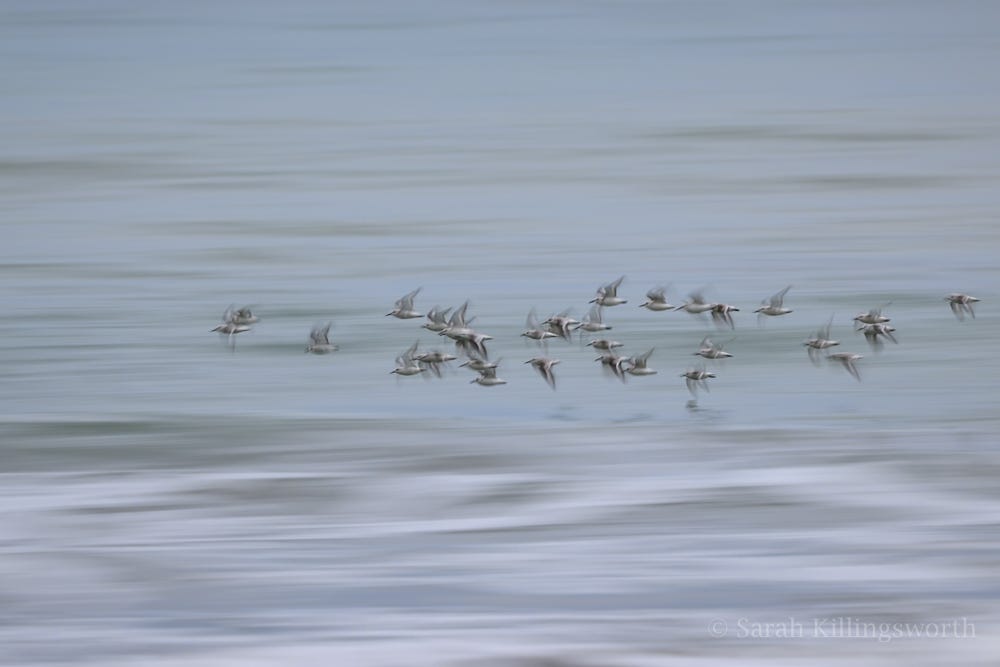
I started with panning several years ago. Panning is a form of intentional camera movement moving the camera horizontally with a slow shutter speed, blurring the background while keeping the subject’s eye or face sharp. It is challenging, and there are a lot of misses, but this technique is something I mix into my shooting regularly in low light, with both mammals and birds. The blur of legs running or wings flapping really conveys a sense of motion.
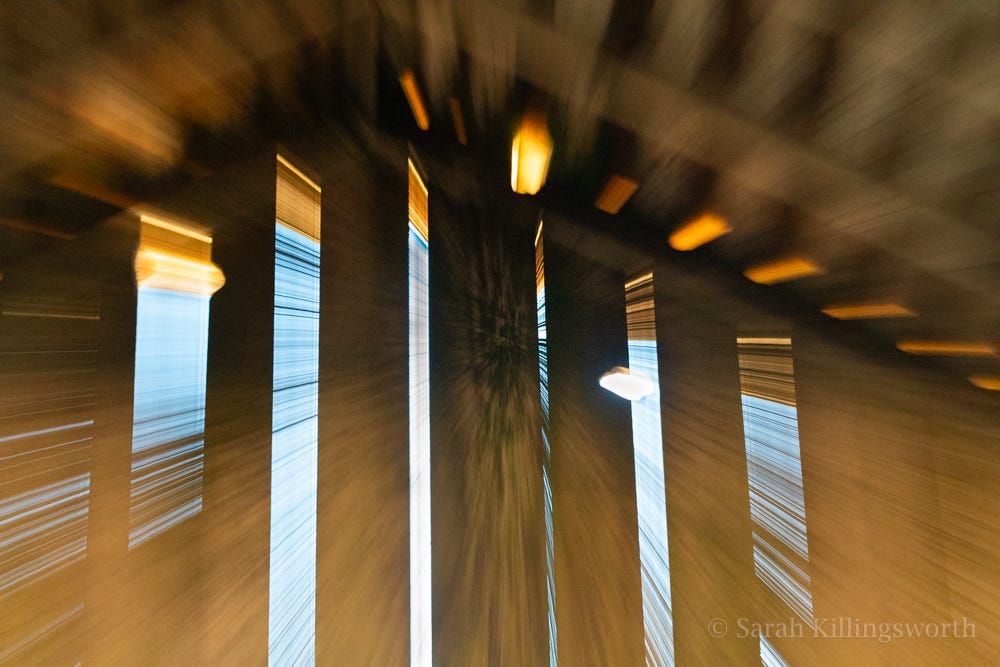
Next, I played around with zoom-blur, spinning the zoom ring on my 70-200mm lens and creating a starburst effect. I played with moving from wider to closer angles, and vice versa, zooming in and zooming out. I don’t utilize this technique very often, though I like some of the images I created when I first started playing with it. I am planning to do more of it this winter.
Most recently, I have spent more time with intentional camera movement (ICM) in landscapes. I love the painterly, abstract quality it creates. It truly feels like painting with my camera. I lose all track of time when I am doing it – literally hours fly by. It has the added advantage of not needing a wildlife subject to produce images that make me really, really happy.
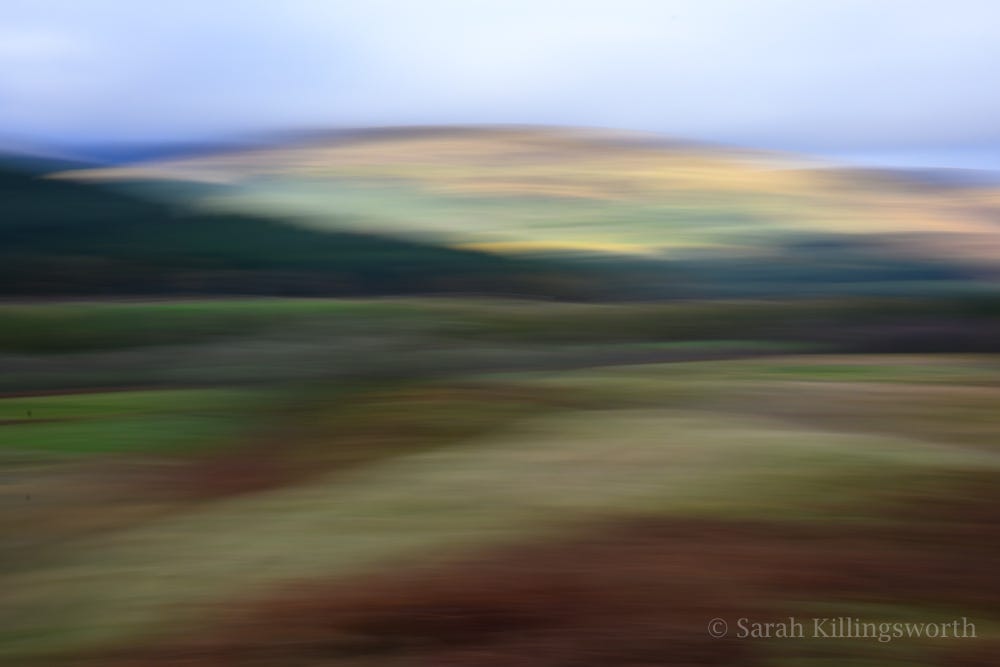
Depending on the light, I typically shoot at 1/10-1/30 of a second. If there’s a lot of light, my aperture might be f/22 but I typically aim for something like f/7.1 to f/4, occasionally wide open at 2.8. I set the ISO at 64. And I find that my older Nikon D850 creates more pleasing abstracts than my mirrorless Z8.
There are so many different ways to move the camera, this newsletter describes the most common ways that I do it. How many inches you move the camera, and how fast you do it, will create different results. As will changing the shutter speed and aperture, even a little bit. The faster the shutter, typically the faster I need to move the camera to get the desired blur. In any given situation, I try lots of different settings and movements – it’s a bit like experimental cooking, trying to add and adjust flavors as you work.
It’s good to have a sense of fun while you’re trying these different techniques. There’s a lot of trial and error. I once had someone say to me “I don’t think it works that way” watching me slide my camera left to right and back again repeatedly while taking photos. It gave me a good laugh, and I explained what I was doing. I have had other people ask me “what are you trying to do?” when they see me using these techniques. Because it does look a little nutty to intentionally NOT hold my camera still (and some of the movements look like I am going to throw it or drop it).
Here’s a comparison of the same scene, an ICM image and then a traditional image.
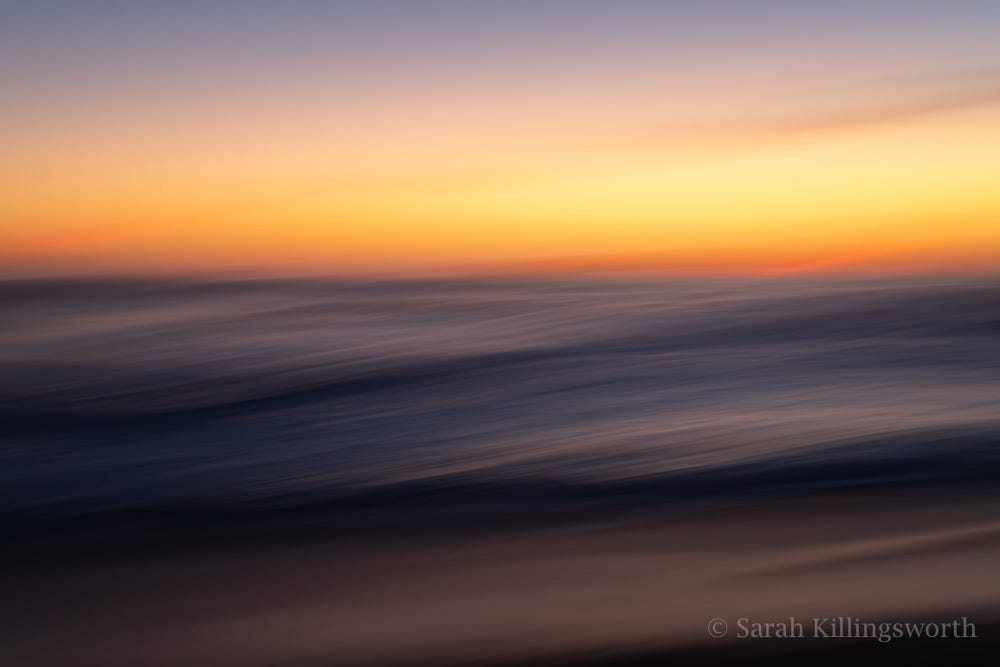
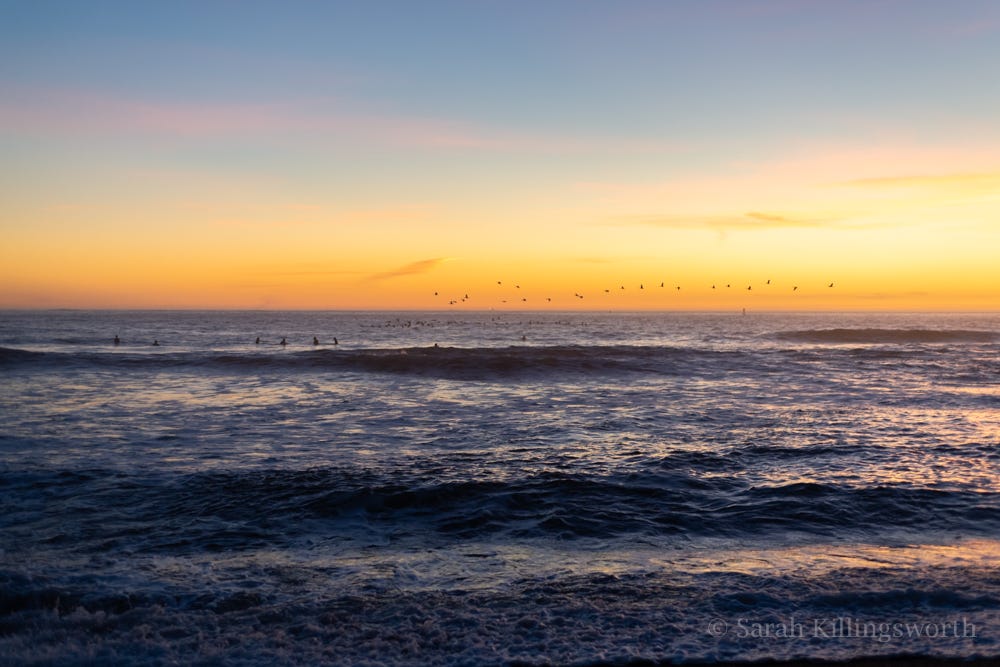
By moving the camera when the shutter is open, I am blending colors and tones and creating a unique image. I look for landscapes or objects with contrasting colors and tones, and for some movements, strong vertical or horizontal lines in the composition. Things that are much brighter than the rest of the scene will create hot spots or white lines, which I try to avoid. For each of the movements listed below, I am also sharing an image, which is just one example of the end result using that movement. But this is a dynamic form of art, and tiny adjustments in angle, speed, or something moving in the frame itself - like the shifting pattern of the clouds or placement of the white foam with waves breaking- will all influence the end result in mysterious and exciting ways.
Horizontal slide, holding the camera out in front of you and swinging it from left to right or from right to left. This is my preferred move when there are horizontal elements in the landscape, like a river bank, a line of hills, clouds, a sunset, or my favorite, waves at the beach. A variation on this is to flick your wrist, so that the camera stays in front of you but the viewfinder flicks from left to right, pivoting on the lower right corner (I am right handed). Another variation is to move in a slight arc as you go from one side to the other.
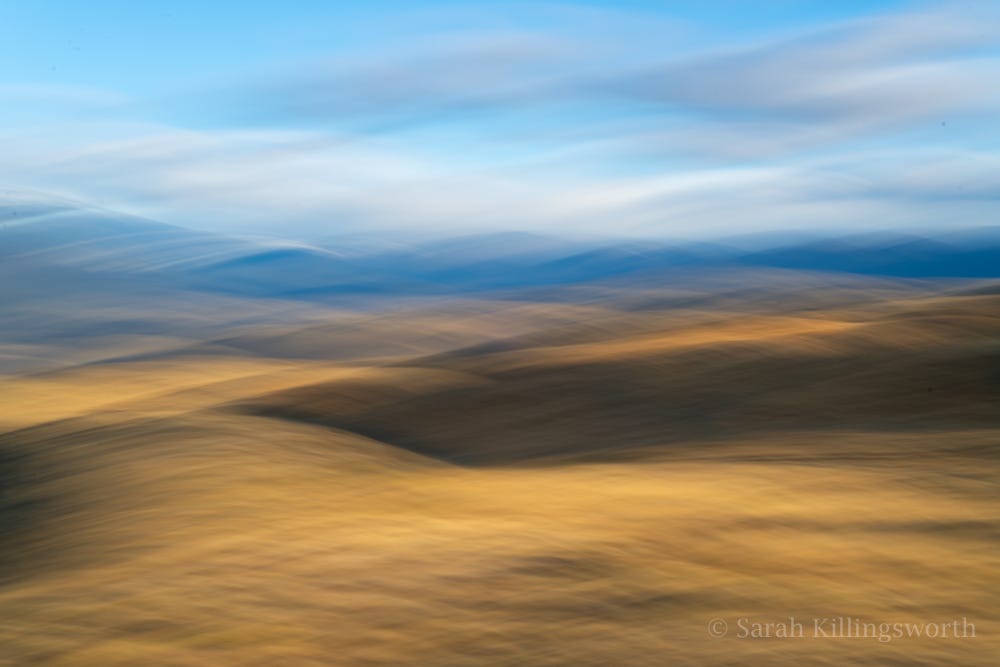
Vertical slide, moving from eye or chest level up or down. I find this works best when there are strong vertical lines – a grove of trees, a clump of bamboo, metal bars, etc. Usually I move continuously up and down while shooting, then pause to take a look at the last batch of images and make adjustments to my settings.
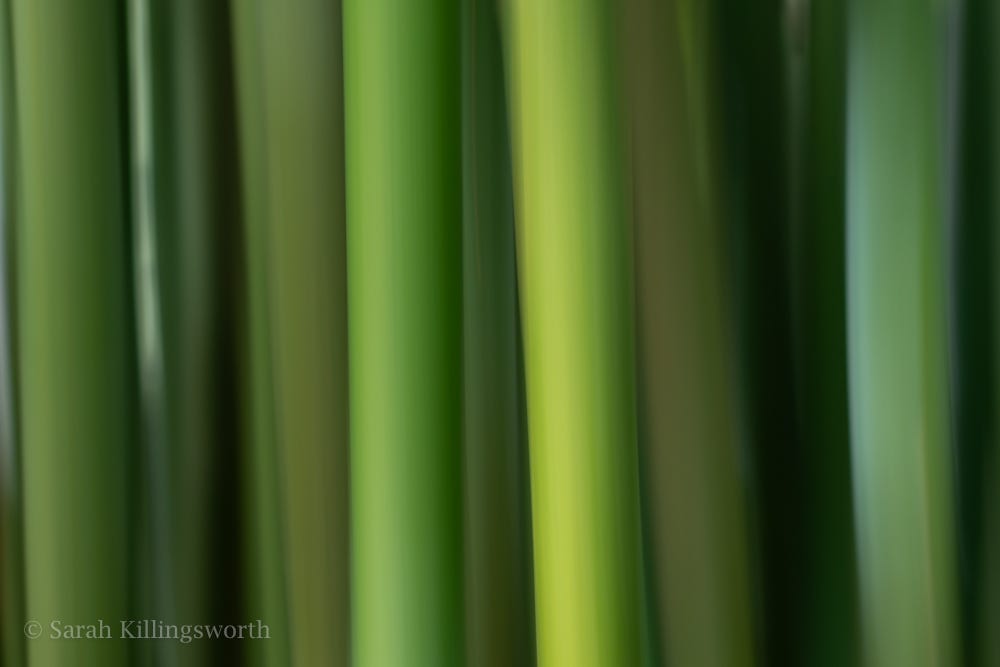
An S-curve shimmy, holding the camera with both hands. I typically do this when working close to something like bark on a tree or colors/textures in rocks.
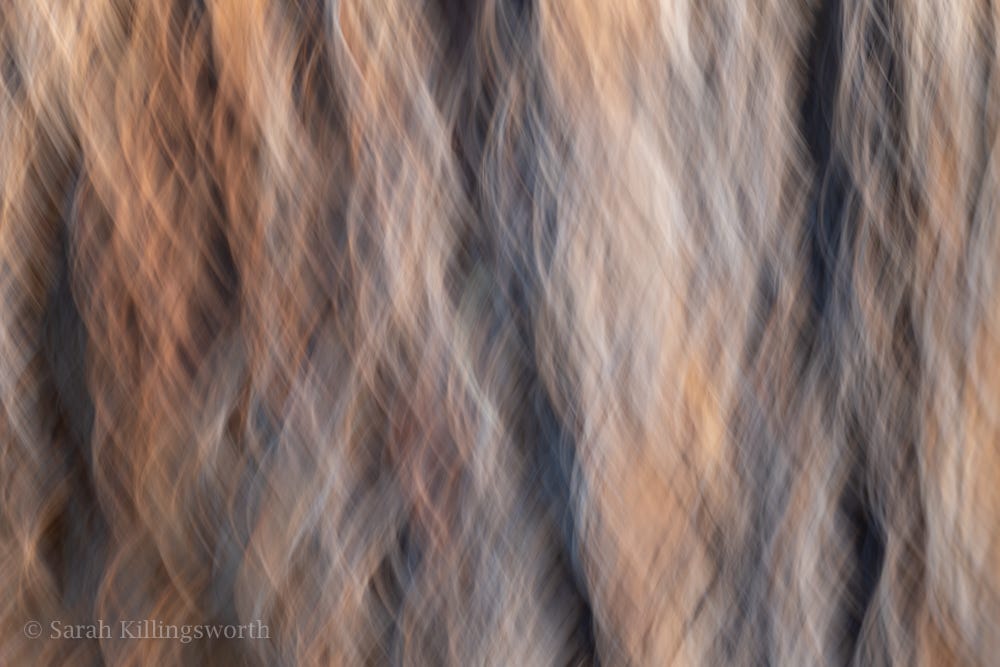
A physical zoom, pulling the camera away or pushing it towards the subject. I do this with trees, rocks, leaves, and other small objects, most often with flowers and leaves.
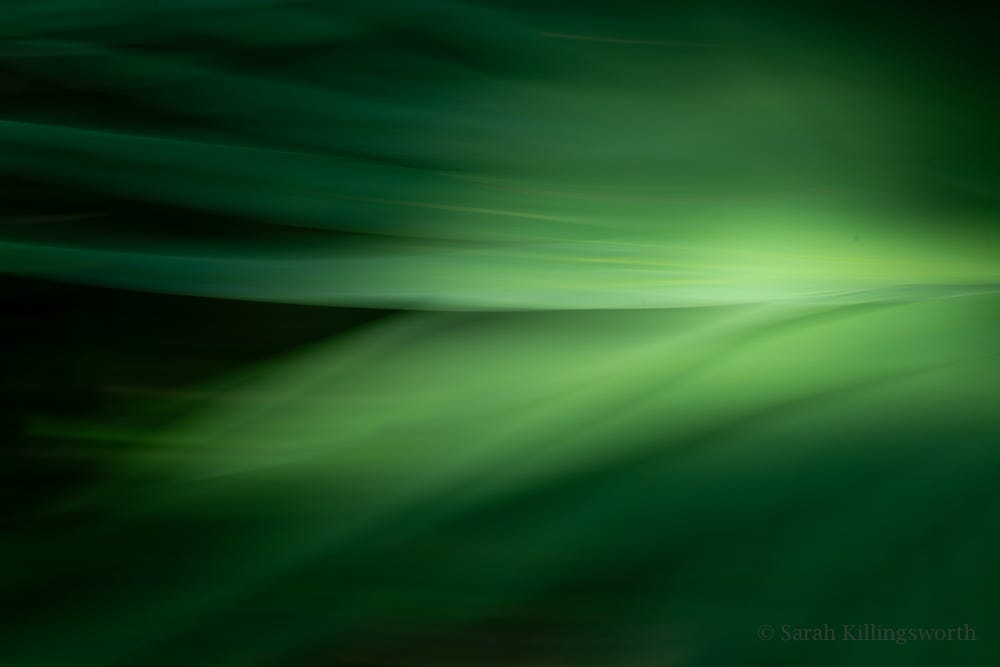
A jiggle or shake is a front to back push-and-pull on the sides of the camera. It often creates a look that mimics multiple exposure (described below).
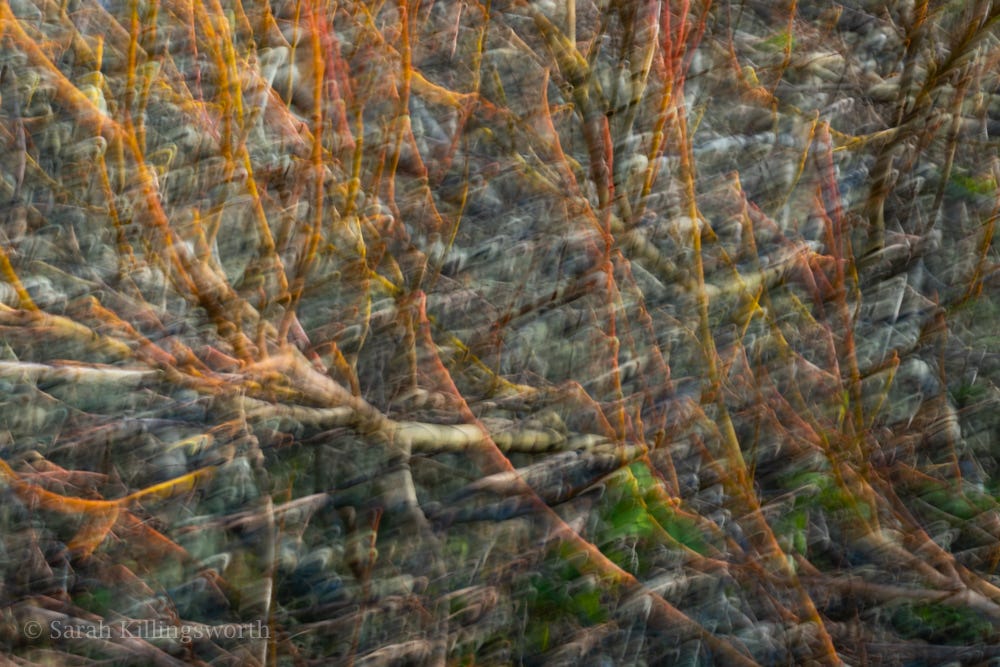
And the spin, where I hold one end of the camera and spin my wrist to the left or the right, as if I am turning a steering wheel. This creates a bull’s eye effect in the image, which can be fascinating, or dizzying. Or both!
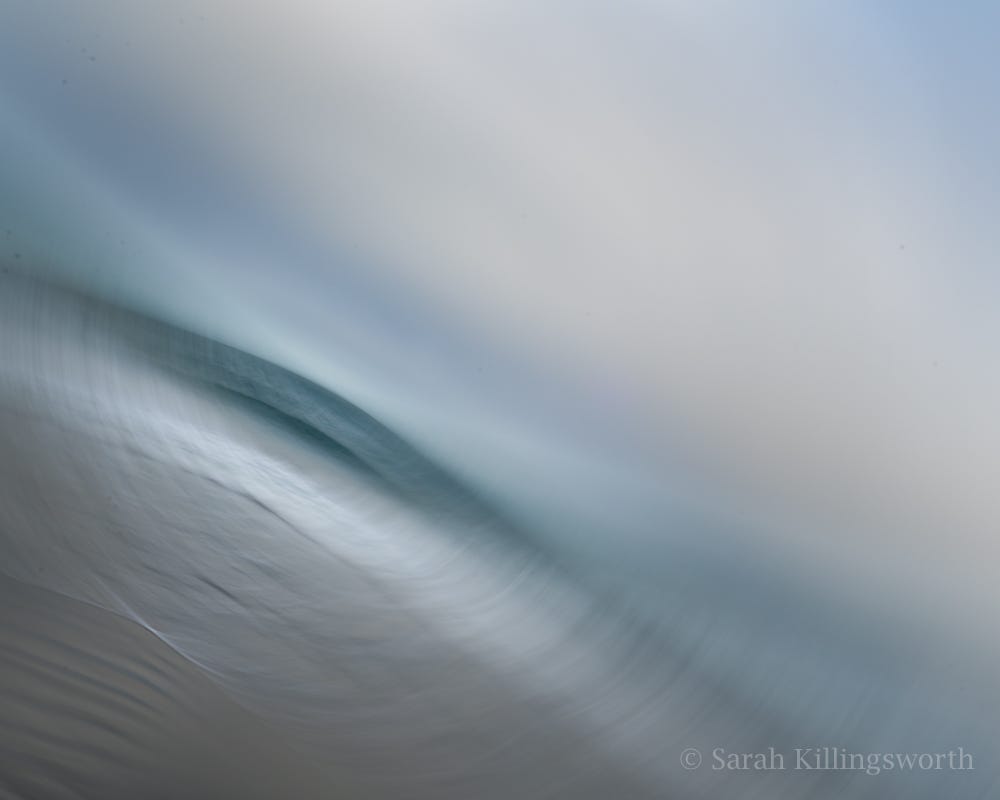
Something I started trying for the first time this past year is multiple exposures. These are multiple photos that the camera combines into one file. And I definitely feel like I need more time to play with it, to discern what situations create compelling images (and this technique has the added complexity of deciding how many images to compress into one file – I typically do 3 or 5). With mirrorless cameras, you can see the images “stacking” with each shot in the viewfinder, so you can compose really carefully. My favorite images using this strategy have been silhouettes against colorful skies, and architectural elements.
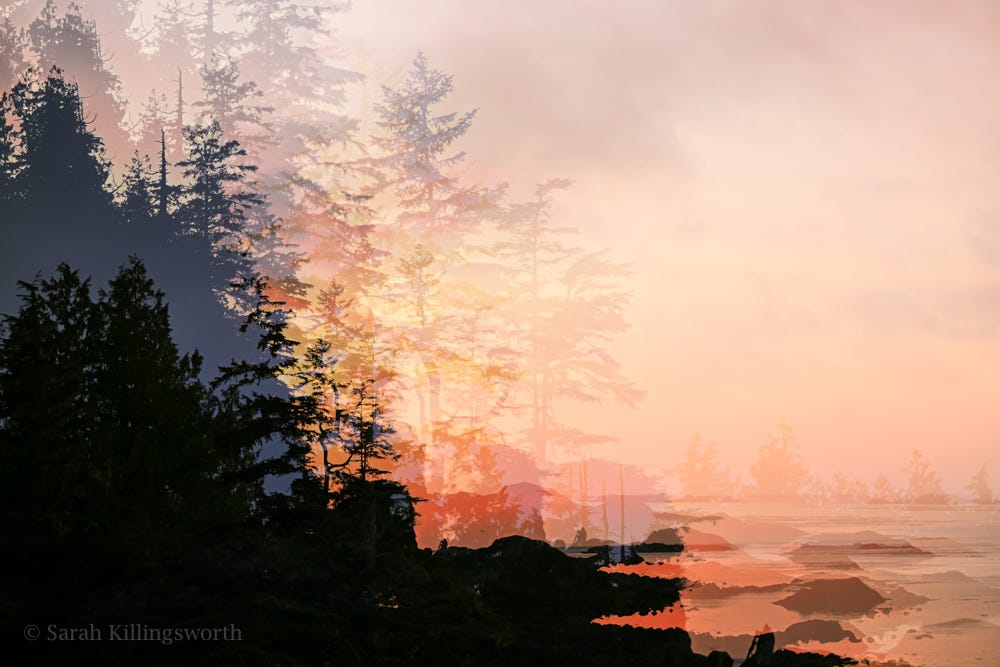
It is important for me to make time for experimentation and unedited creativity, at least once a month. I love getting out and shooting something that isn’t for a project or story that I am working on. I enjoy the creative process, the experimentation and getting into a state of flow.
What helps jump start your creative practice? Has this newsletter inspired you to get out and play with your camera? I would love to hear about it in the comments!
You know I am here for all of these. I adore the images with the landscapes of painterly colors! I also loved the closeups especially the one of the green leaves. I have done so many versions of this over the years as well, and you are right that you can lose hours and just have so much fun. It was great to get to see your art in this category of play. Thank you for sharing it here!
Hey Sarah, this was a great newsletter and I really enjoyed reading it. Your beautiful ICM work and this thorough explanation has definitely inspired me to give it a try. I just have to work on my patience and get in the zone. 😁