

Spring Cleaning
Some musings on my relationship with objects and the wild origins of that attachment.

This past weekend, I spent some time purging my closet. Something I rarely do. And I started thinking about objects and our relationship to our possessions (and even that word….what does it mean to possess something…) and thinking about wildlife and the relationship any individual animal might have with a particular object.
I am terrible at purging and getting rid of stuff. I find myself looking at things and thinking of a future moment where they could be useful or reminiscing about a past trip or party that I wore them to. And I don’t want to let go of the item. Maybe because I don’t want to let go of the part of myself that it represents in my mind. On an intellectual level, I know that it is “just stuff.” But for me, the process of shedding unneeded items is emotionally draining. In trying to decide what to keep and what to give away or donate, there are so many thoughts about each item. Will I ever wear it again? Is it still remotely in fashion? If giving it away feels wasteful, complicit in the consumerism that plagues modern life, then what does it mean if I hold onto it and never wear it again? Uncluttered spaces are better for my mental health. The emotional tie I feel to these items seems so odd to me, a puzzle given my lack of interest in status-symbol items and conspicuous consumption. A scarcity mindset in the lack of scarcity.
It often takes the passage of time -and by that I mean, decades, not just a few years - before I can let go of things. And even then, it’s hard. Sometimes I feel ashamed of the clutter in my closets, of my reluctance to even try to eliminate items, a persistent desire to hold onto these bits of fabric, wishing that I was less emotionally connected to dresses and jackets. Acquiring so much stuff, then being unable to let go of it, feels like a moral failing. And I am not someone who is interested in the latest fashion, the “must have” purse or shoes of the season. I don’t frequently buy clothes. Most of my purchases in recent years were utilitarian clothes to wear in the field, purchased on Ebay if I can find it there. But all of the emotions I felt while staring at piles on the bed and purging got me wondering: Why do we hold onto things at all? Since we, too, are animals, I started thinking about the relationship between other species and objects, curious about the connections and possible motivations.
At the most basic level, objects can serve a purpose, whether used as tools or sustenance, to provide camouflage or protection, or to attract a mate. But objects can also be decorative, part of a desire to make our bodies and homes not just safe, but beautiful. Fashion and home design are creative endeavors, though they have origins in protecting our bodies from the elements, and predators. The impulse to beautify is as ancient as cave paintings, shell jewelry and beaded or embroidered clothing.
Gimme Shelter
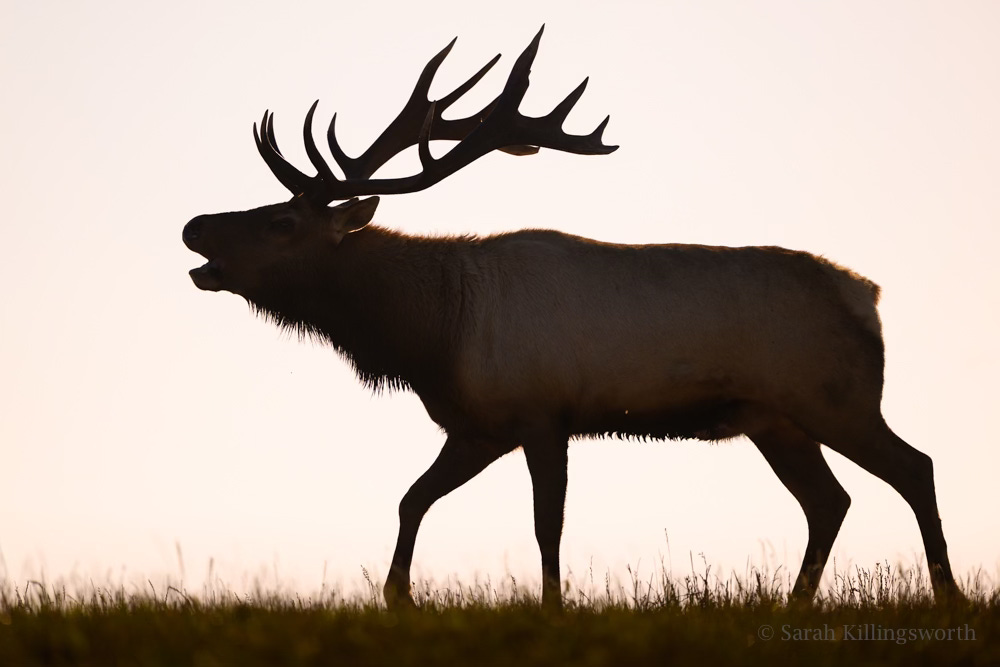
Animals collect objects for camouflage, to provide safety for themselves physically. Caddis fly larvae cover themselves with leaves and tiny twigs that they bind together with silk to make a protective shell. Decorator crabs cover themselves with objects from the ocean’s floor to hide in the aquatic landscape. On land, elk thrash their antlers in brush, often emerging from this shadowboxing with branches and grasses dangling like tinsel in a display of dominance to intimidate rivals and hopefully also attract mates.
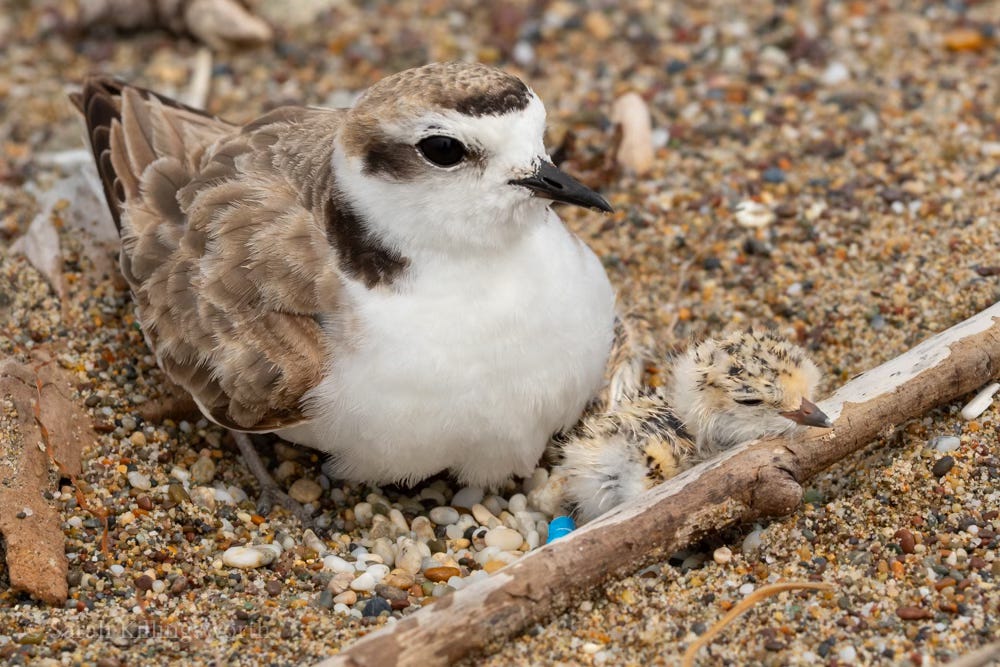
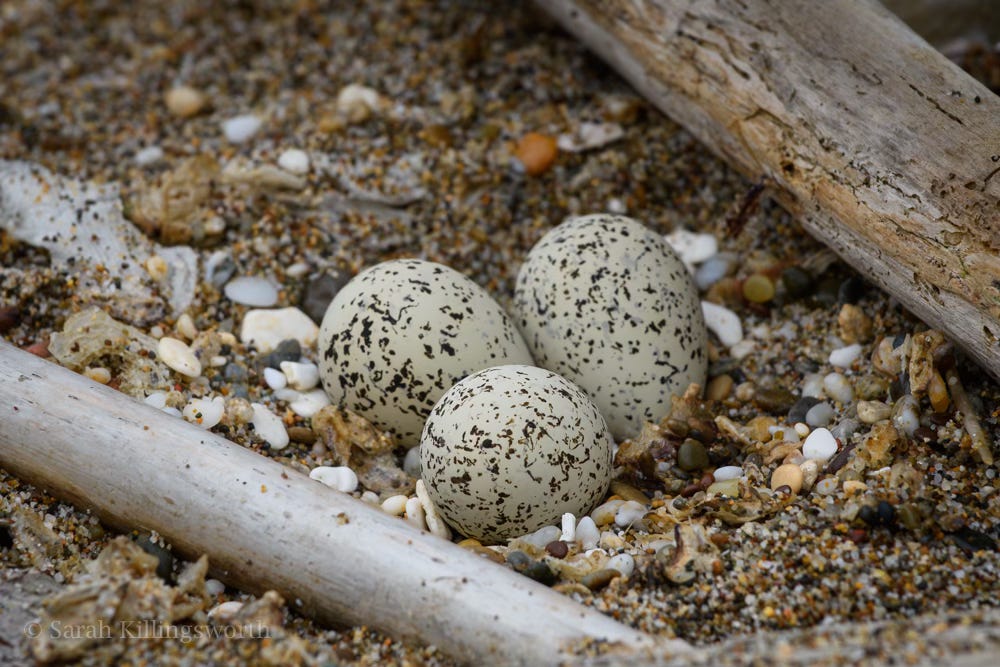
Other animals use objects to build nests or dens – gathering sticks, string, fur, feathers, pebbles, or plant materials to create a haven for their babies. Building a nest is utilitarian, important for survival. But some species decorate the nest, moving beyond purely functional items – male Bowerbirds collect colorful objects which they place around the nest to attract a mate. Western snowy plovers will decorate their nests with white pebbles, which in addition to being beautiful, might reflect heat, or be attractive to a mate. Similarly, the giant Pacific octopus creates an “octopus garden” of shells decorating the entrance to their den, maybe providing added protection, or simply discarding the remnants of prey (and also inspiring the famous Beatles’ song).1
Building a nest takes a lot of energy, so it would make sense to reuse a nest when possible. As one would expect, a nest that is successful one year is more likely to be reused. Great horned owls don’t build their own nests but take over nests built by other species – often Red-tailed hawk nests. These large stick nests can be quite durable, lasting years with some repairs each season. Why would a bird not return to a nest? Most commonly because a predator is in the vicinity, or due to nest failure the prior year. In a previously used nest, lice, mites, bacteria can also be present and a threat to chick survival.
Tools and Toys
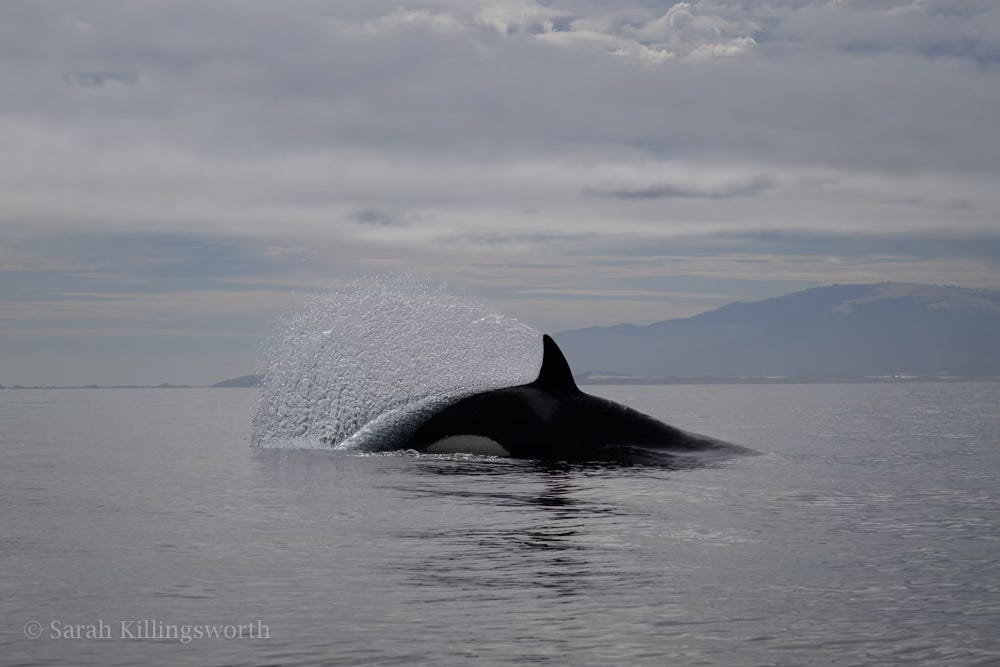
We use objects for more than camouflage and shelter, however. A tool is defined as “a device or implement, especially one held in the hand, used to carry out a particular function.” You don’t need a hand, or even a thumb, to use tools, though, as orcas have proven. “Allokelping” is a recently discovered phenomenon where an orca bites off a piece of kelp and uses it to rub the skin of another orca, for itching or shedding skin.
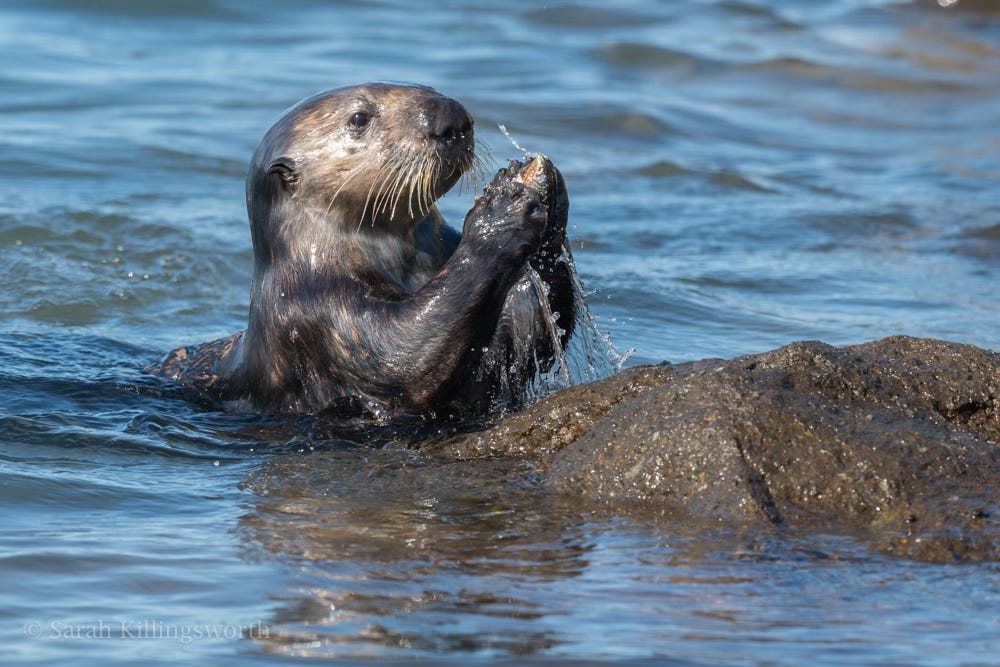
Sea otters store a favorite rock in a pouch under their front leg, used to break open clams and other shellfish. Elephants use rocks and logs to flatten fences so they can walk across. Sometimes, a tool might be immediately used and then discarded. But occasionally, like a sea otter’s rock, something is carried along an animal’s journey. In the wild, the question is whether the additional energy required to carry something is outweighed by the usefulness of having it. That’s a good question for us, too.
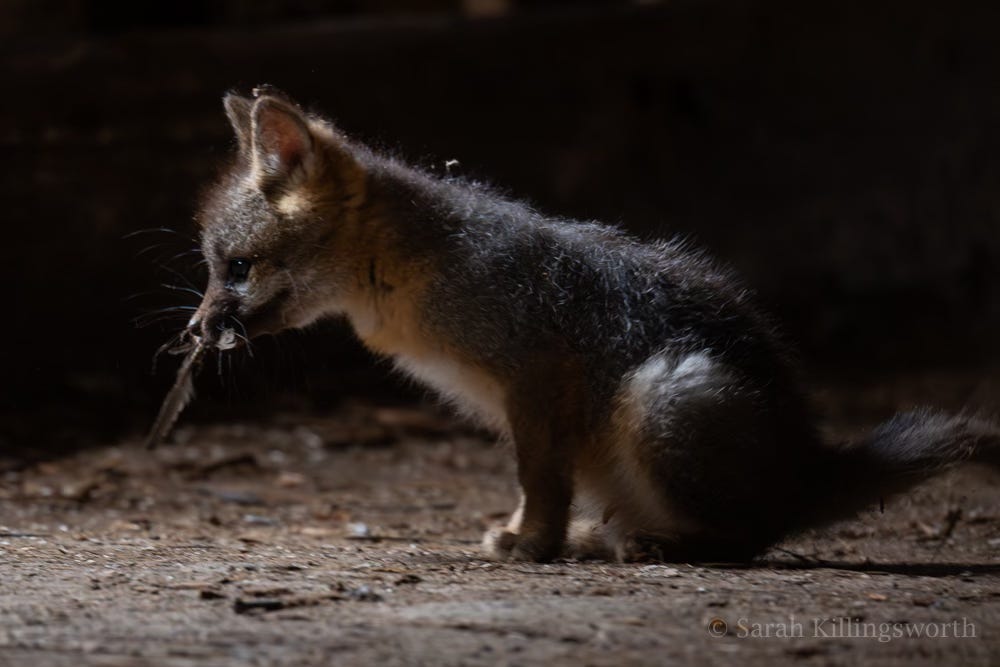
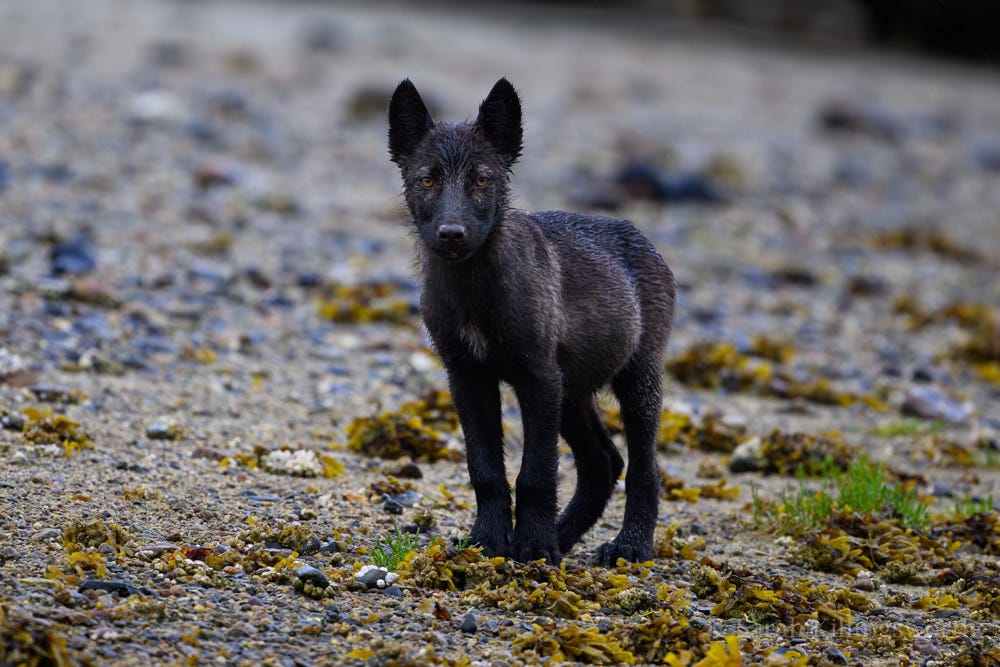
Just as other species use tools, play is not solely a human pursuit. Some animals also appear to interact with objects purely for joy or fun – using them as toys or simply collecting shiny objects. Wild canines are particularly curious and exuberant, I have seen gray fox kits play with feathers, coyote pups play with skulls, and coastal wolf pups play with shells on a beach. One way to find a wolf den is to look for the pile of “toys” outside the entrance. Wolves in Yellowstone carried an orange traffic cone away from the roadside out into the field. In our backyard, the local gray foxes delivered a neighbor’s shoe, delighted in racing around in front of my trail cameras with a rubber glove, and one summer deposited no fewer than 5 different colored rubber balls next to our house. I still have no idea where those balls came from, but the foxes placed them in a pile over a matter of weeks. And then, a year or so later, they all disappeared.
Hoarding
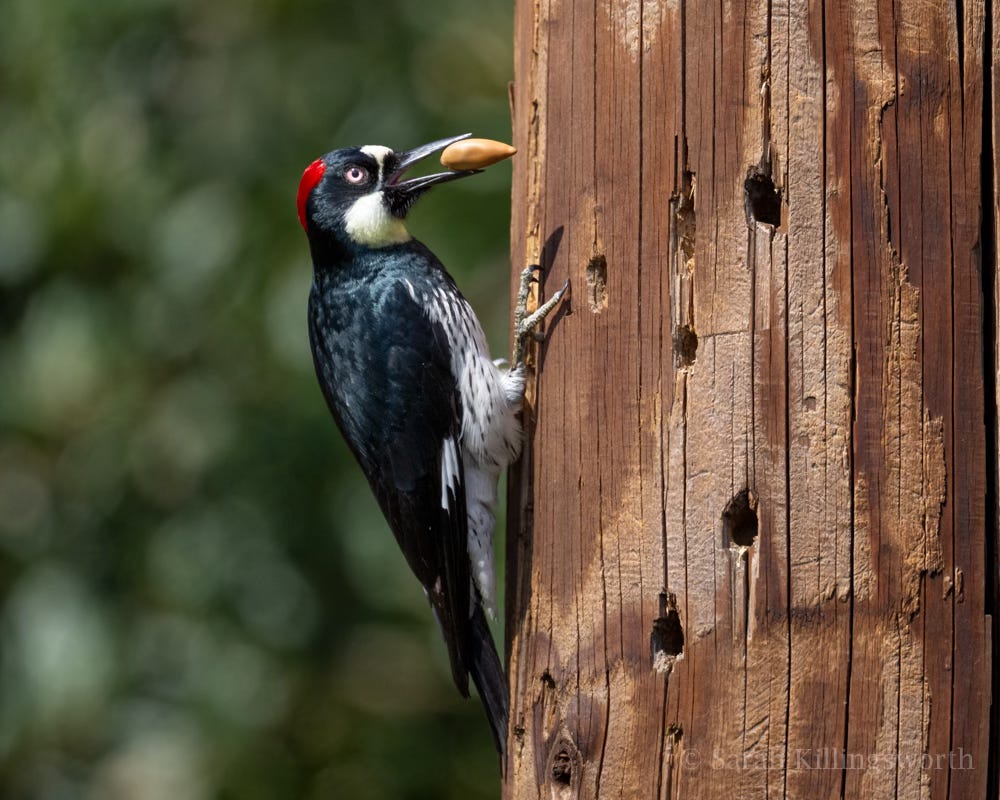
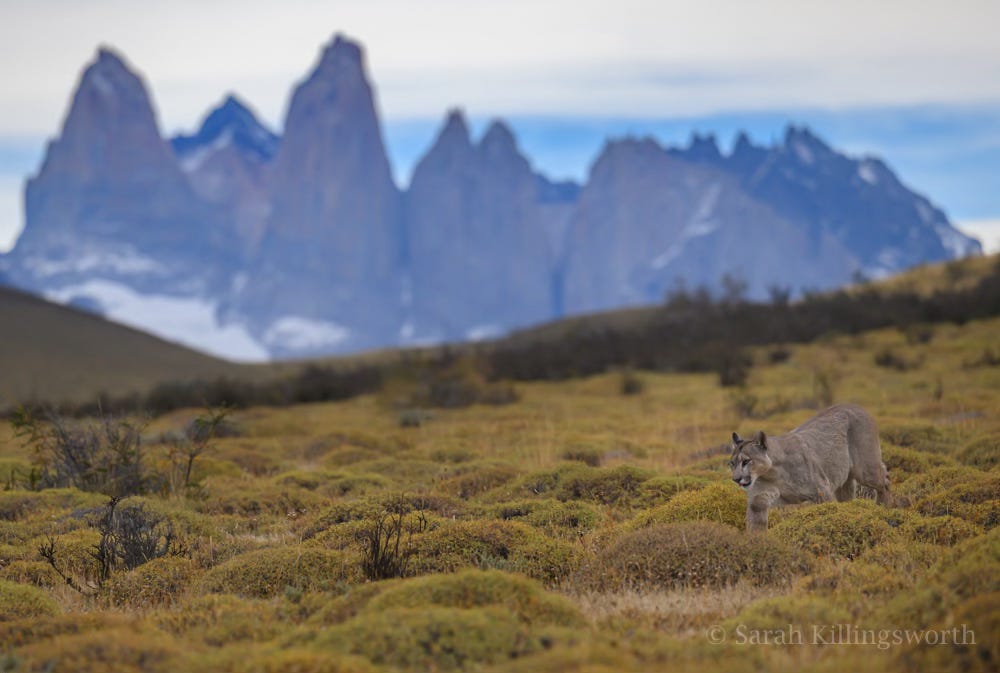
Lastly, and critical for survival, many species stockpile food. Hoarding implies an ability to think about a time in the future when food will not be readily available. Or at least an instinct to gather as much as you can when it’s available because you never know when it might not be available again. Acorn woodpeckers store food in granaries, depositing hundreds of acorns in holes in a single tree or telephone pole. Scrub Jays and squirrels stash food for winter, requiring the ability to recall where to look for that food later. Moles eat earthworms and in preparation for winter, will decapitate hundreds of worms (immobilizing but not killing them) to hold onto them in a larder. If they aren’t eaten, eventually the worms will grow new heads and move on. Many predators cache prey, storing it for days, weeks or even months later. Snow and ice extend the preservation of carcasses. River otters cache bird carcasses under rocks under water. Mountain lions and bobcats will hide a carcass under brush, using their paws to scrape and move grasses and branches over the prey.
I am acutely aware in this rumination on the relationship between other species and objects that I do not know, and cannot know, what it would be like to experience the world as another being. I can observe behavior, read books and articles and have theories about what is happening for another animal, but to only describe other species’ behaviors and abilities in comparison to a human’s would be to diminish every other species. The fact that I cannot know what it is like to be a Western snowy plover decorating a nest is part of the addictive magic of wildlife observation, of wanting to understand their world. I wish I could experience their umwelt. I see many similarities between species and at the same time I delight in trying to understand the nuances of our differences, too.
Back to my home
All of this makes me wonder about the level of conscious thought versus instinct that’s involved in humans accumulating and holding onto food and other objects. Thousands of years ago, we needed to save food in preparation for a lean winter ahead. Animals hoarding acorns or worms is much like humans drying, smoking, salting or canning foods when we lived in communities that didn’t have grocery stores. Nomadic lifestyle made holding onto clunky items for multiple years difficult.
Our desire to keep or store objects has its origin in survival. We, like other species, use objects to protect ourselves, to have a safe place to raise our young, as well as for tools to obtain food, and to attract mates. But we have long since passed the days as humans where we gather the materials and build our own dwellings to keep ourselves and our babies safe. Is my seasonal desire to clean up my “nest” driven by some ancient biological drive/instinct to prepare a home as we head into baby season?
In a modern world, we can amass far more objects than we need for tools, shelter or camouflage, or to play, or to attract a mate (but perhaps this last category is endless?!).
Even utilitarian objects can certainly bring pure joy or pleasure. There is no question that exceptionally soft sheets make getting into bed feel better and eating dinner on beautiful plates makes a meal feel more special. Sharing food has such an emotional component. Perhaps that’s one reason I love collecting old dishes. Setting a beautiful table is a way of creating a joyful atmosphere for people I love. Which again is a fascinating insight into the values I place on objects. Not just aesthetic, but also emotional. My collection of vintage plates is emotionally linked to my desire to fill my house with people I love, to make and share a beautiful meal. Maybe not so different from decorating my nest with white pebbles.
As adults, we have relatively few objects that we truly use for play. If you think of deep play as reaching a state of flow, as adults, we most often reach that either in sports or in creative pursuits, like painting, drawing, music or photography. There are a few games played by adults outside of those categories - poker and Mahjong come to mind, and of course in the digital age, video games. In the wild, playing with objects is typically reserved for the young.
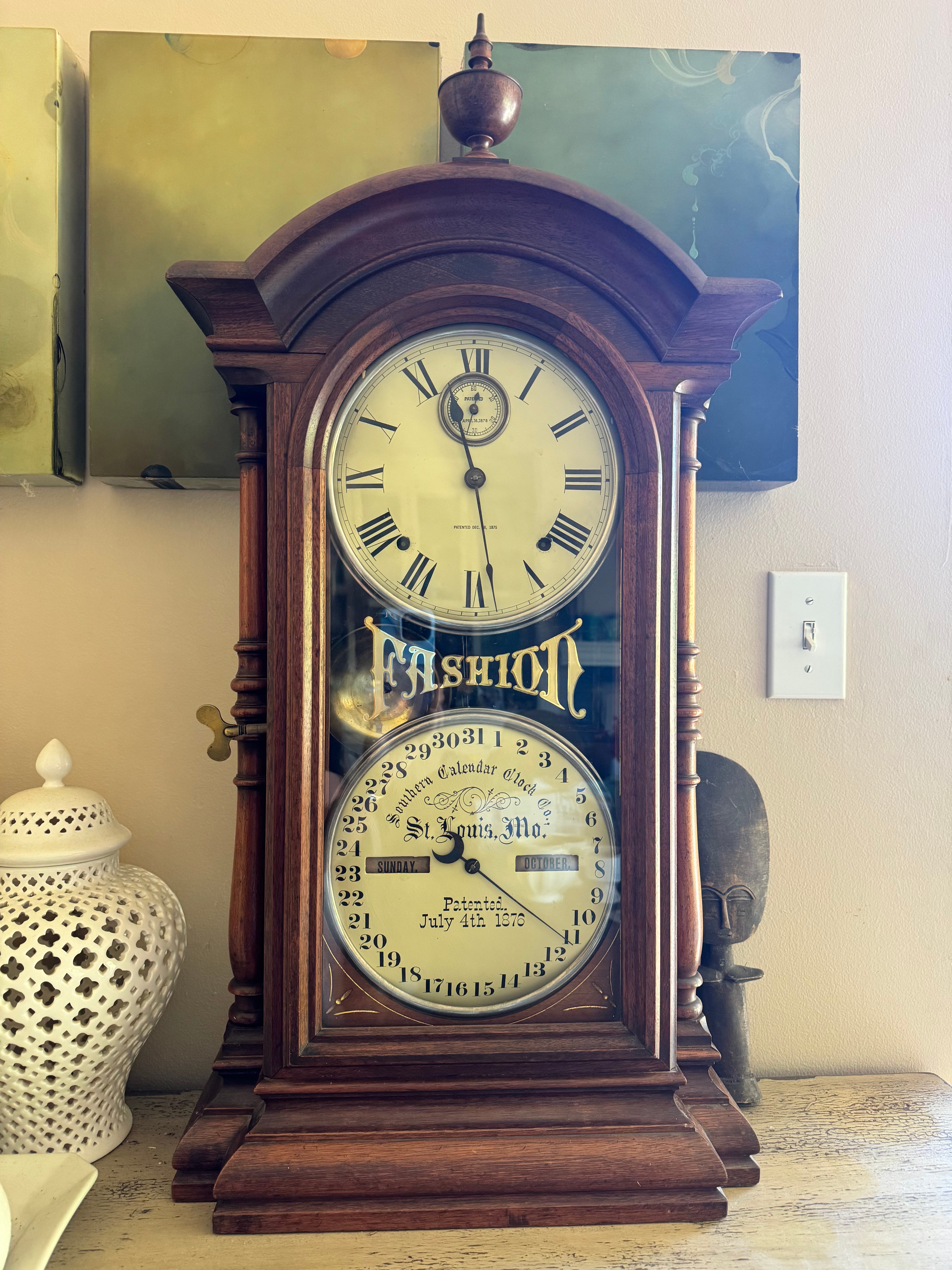
There’s a piece of the accumulated stuff in our houses that is also undoubtedly tied to mortality and legacy. And for me, a sense of needing to preserve history. For example, what do we do with our grandmother‘s china, a musket from the civil war, or a clock that has been in our family since the late 1800s. There are objects that we hold onto perhaps out of obligation, perhaps out of a desire to feel a part of something larger. Maybe the family heirlooms are away of declaring who we are, where we come from the way our last names did in the past. And in one sense, bequeathing objects to others offers the illusion of immortality, which may be why discarding some items feels like a betrayal of our forebears. Among other species, intergenerational transfers are rare, though chimpanzee mothers will give their offspring a tool as part of teaching them how to find food.
The Connection
I connect deeply with animals, places and people, so perhaps it is not surprising that reminders of special moments and relationships are hard for me to part with, even when the objects no longer have a utilitarian purpose. Every year or two, as the vernal equinox approaches, I take a weekend to work on releasing some of the accumulated stuff, creating space both physically and mentally.
Anyone else struggle with this? Do you have a Spring cleaning ritual?
I would love to hear about it in the comments.
You might notice some musical references in this post. Unconsciously, I think as I wrote this, it was a sentimental nod to my dad. He loved the Beatles and the Rolling Stones, and his birthday was March 18th.
You’re an amazing writer! I struggle with the same thing. I told myself that when I retired I had 2 goals: 1) learn how to make good sourdough 2) clean my garage. I’ve been retired now for 6-7 years. Sourdough-check. Garage - still waiting…
And yes, I definitely struggled to get rid of things especially things that came from family members and our sentimental to me!