

One Day
What would it be like to inhabit the fur of a bobcat mama? I can’t say for certain, but here’s what I imagine, based on years of observations in the field.

Nestled under the coyote brush, the matted grass and loamy soil make a soft bed. Small ants and shiny black beetles work the soil, creating tiny tunnels in the spaces between tufts of grass. The branches overhead are keeping you dry from the leaden, thick nighttime fog that coated the grass in glistening dew drops.
You are tired, but beside you three small, soft, furry babies start wiggling as they wake up. The largest and liveliest of the three quickly climbs over his siblings and pushes up against your spotted stomach, eagerly seeking breakfast. Rubbing his head against your body, he settles in to nurse, laying against you. His two sisters, roused by his wiggling, start to move towards your stomach as well. Walking like drunken sailors on wobbly legs, they make plaintive mews as they come towards you. They quickly find a spot to nurse and all three kittens nestle in the safe embrace of your limbs. You fall back asleep nursing all three of them as the sun rises, warming the soil and drying the grass.
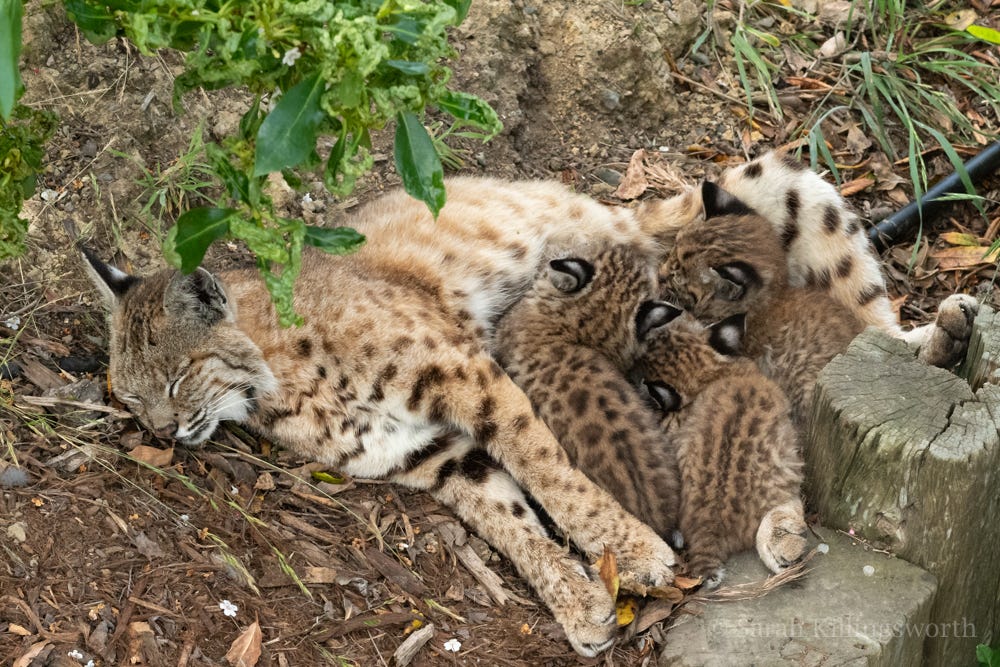
An hour later, your own stomach rumbles with hunger and you stand up. The kittens complain about the interruption of their snuggling. Breakfast is over. With a growl you tell your three babies to stay in the brush, safely hidden from threats like coyotes and deer. The kittens scurry further back into the bushes and begin wrestling and pouncing on solitary blades of grass. Sitting up with a large yawn and a long, languid stretch of your front legs and then your back legs, you step out from under the cover of the bushes and into the spindly forest of grass. Looking across the fields and the hillsides, you listen and scan for signs of something to eat. Your ears flick and rotate, hearing quail, ravens and redwing blackbirds. The grass tips brush your shoulders and face as you step forward. A gopher or vole would be the easiest catch this morning, but a snake, lizard or bird would make a fine breakfast as well if one presented itself.
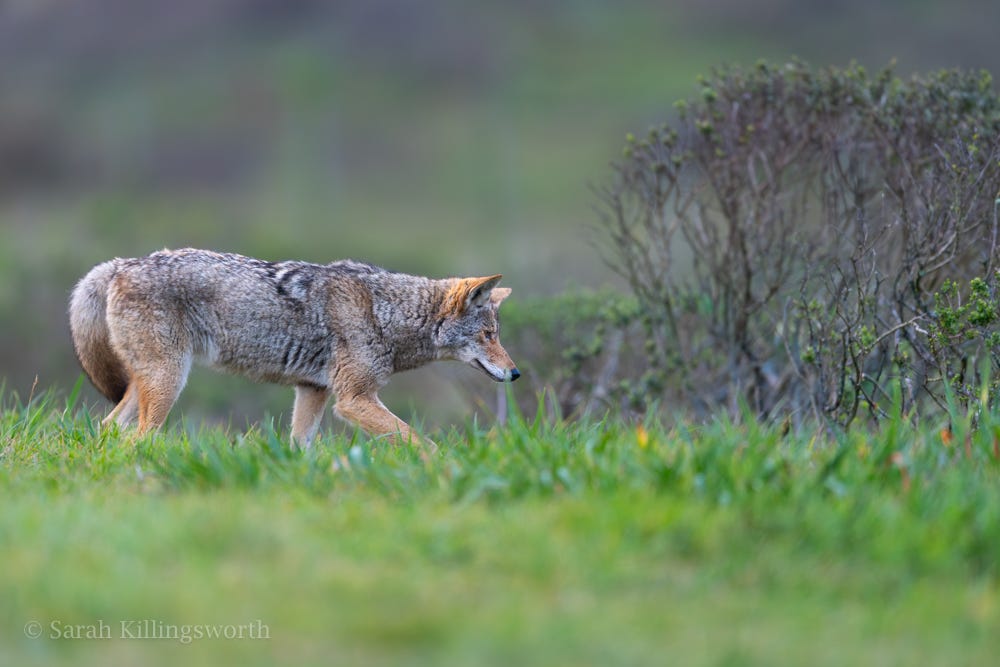
You begin to walk slowly into the tall grass, quickly disappearing. Water soaks your paws and sharp foxtails catch on your coat. You stop with irritation to flick water off your front paw and then use your back foot to scratch at a tick that has lodged itself on your temple. Annoying. Eventually it will fall off but these small parasites are distracting, and you wish they would stop hitchhiking a ride latched onto your flesh. The empty rumble in your stomach is more persistent, as you haven’t had much to eat the last two days. Hunting was difficult yesterday in high winds, and coyotes came and interrupted your hunt last evening. The wind was blowing their scent away from you, so you didn’t smell them as early as you typically could. Instead, you saw them when they were just 100 yards away – frighteningly close. Your heart thumping, you sprinted into the bushes, crouched low to the ground and tried to make yourself invisible. You watched them with their noses fixated on the earth, following your scent trail and coming ever closer to your hiding place. As they approached the bushes where you hid, one of their family members howled in the distance and they turned to move towards the call, answering with their own wistful song. A wave of relief washed over your body before you realized they had moved in the direction of the kittens, and you pushed your way through thick brush to find a hidden way back to check on your babies. At just three months old, they are quite vulnerable. Thankfully, you found them safely dozing in a pile. Coyotes have been known to chase you and steal your prey in the past. You decided it wasn’t worth the risk to attempt another hunt last night and laid down beside your babies.
Between nursing the kittens and bringing prey back to them, there has been little for you to eat yourself. Yesterday morning you wolfed down one gopher, but that’s all you’ve had to sustain you. Hunting in tall grass and high winds is hard work; the resistance drains your body of energy. And it is harder to maintain your focus on hunting while also being alert for dangers and threats in challenging conditions.
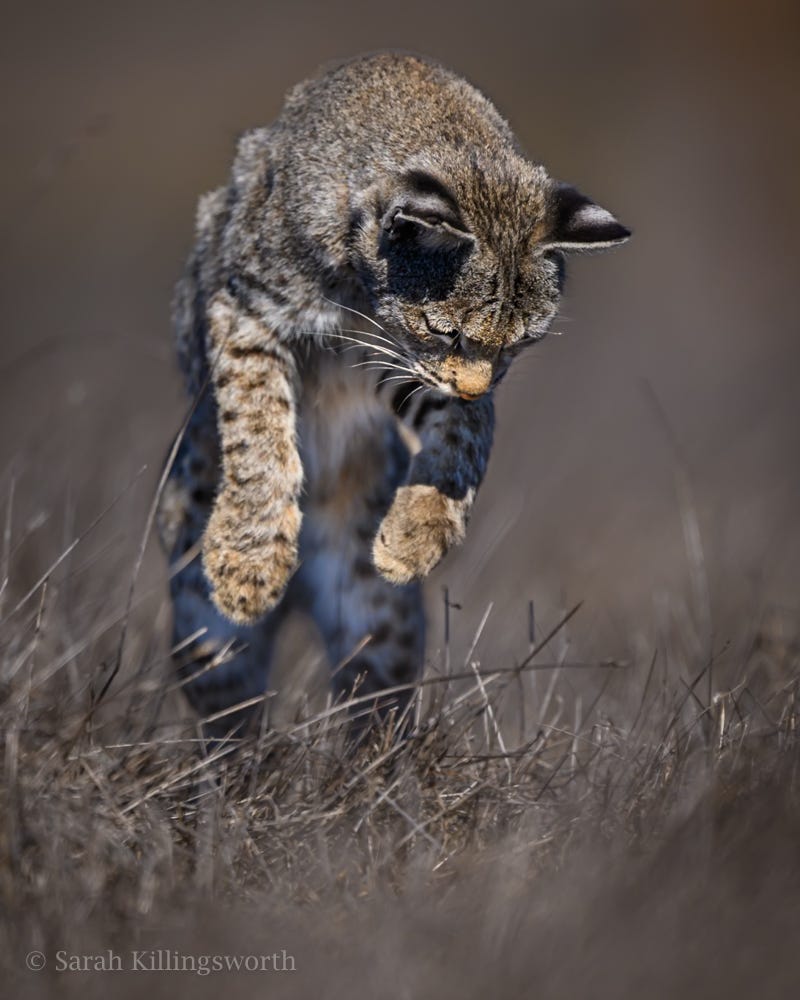
Walking further into the field to find breakfast, the fur on your back absorbs and reflects the heat of the intense summer sun. A redtail hawk circles overhead, soaring on the updrafts of wind. Unlike you, they seem to savor the thrill of high winds. White-crowned sparrows call out an exuberant melody from the barbed wire fenceline. Your head swivels as you hear a gopher tugging at the roots of a clump of grass 20 yards to your right. Your quickly trot in the direction of the sound, eager to get a meal. When you get close to the gopher hole, you lower your body to the ground and slink forward, slowly, muscles taut. And when you are quite close to the hole, you flatten down to the ground completely, ears plastered against the side of your head and eyes fixated on the opening in the dirt. You can feel vibrations in the soil in your stomach muscles as the gopher moves in the underground tunnel. Time passes. Thirty minutes later, and still, you lie motionless, waiting. Just then, you hear a scraping and know that the gopher is moving towards the surface. You have just a fraction of a second to propel yourself forward and grab the gopher by the back of the neck with your jaws. Muscles twitching, you leap, nose into the hole, but end up with a face covered in dirt and no gopher. Shaking off the failure, you begin to walk away slowly, listening and scanning for another opportunity. Given your petite size, you are also always on the alert for danger.
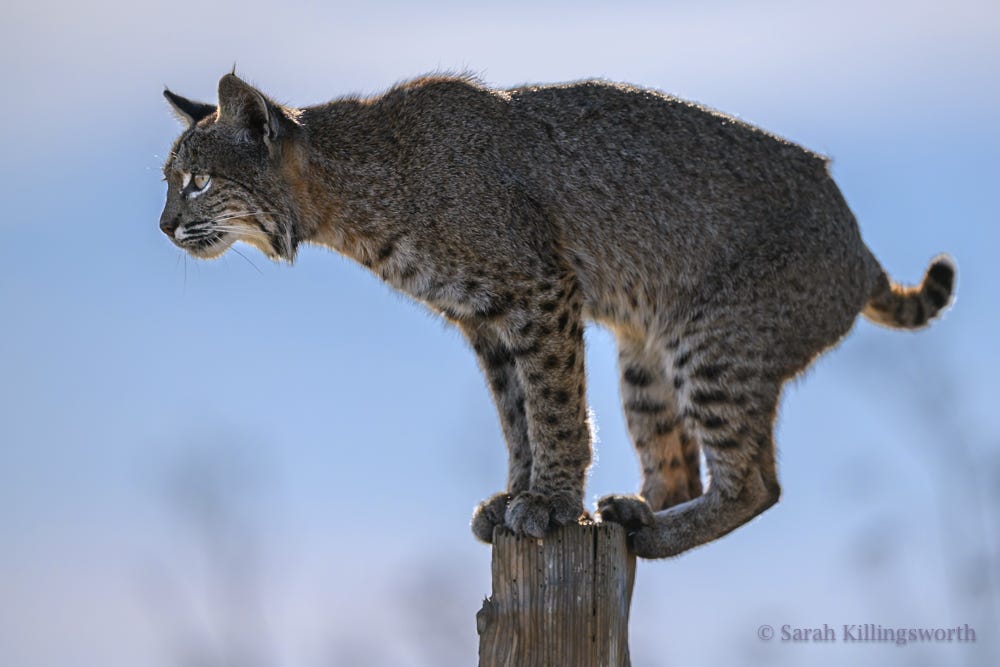
As you continue onwards, there is little sign of any potential prey. Hoping to get a better vantage point, you jump up onto the top of a wooden fence post. Taking a quick look around, you notice a flock of quail in the bushes a short distance away. Quickly jumping down, you creep silently towards the coyote brush. The quail are chittering and cooing and don’t seem to have noticed your presence. So once again, you flatten down soundlessly and wait. And wait. The quail move around on the ground while one male stays at the top of the bush, a sentry. Luckily, he hasn’t spotted you. Eventually, one of the quail moves around the base of the bush and wanders in front of you. Boom! You leap, propelled by strong back legs and this time, you are successful. The rest of the flock lifts from the ground in a thunderous cacophony of wings and flies away. A bird in your mouth, you trot back towards the kittens. Hunger stops you, however, and you sit down to eat the quail. It takes mere seconds to rip it apart and consume it.
Your hunger abated, muscles tired from the two hunts, you know you need to hunt again, this time for your kittens. As they grow, they need to consume more prey items, and eventually you will bring them along on hunts, teaching them to get food for themselves. But not today. Walking further away from them, you continue looking and listening for anything they could eat. You have been gone for more than four hours now. You wonder if they are asleep, or playing, and hope that they have stayed safely hidden.
You cross a gravel road, hoping to have better luck in the next field. The ground is still wet and muddy in a ditch next to the road, and you hear something in the grass. Crouching on the surface of the road, you wait, and then, certain that there’s a gopher in the hole, you once again flatten your whole body to the ground, muscles tensed and ready to spring forward. The road reflects the sun’s heat and you begin to pant, mouth slightly open, waiting. Suddenly, you hear the rumble and roar of an engine. You jump off the road into the field and try to hide behind a large clump of grass as a pick-up truck thunders by, spewing dirt and dust as it speeds past you. Pulse racing and filled with adrenaline, you decide to walk away from this gopher hole and try to find one in a less dangerous location. If you’re hit by a car and injured or killed, your kittens will starve and die too.
Continuing down a path between the grasses, you scrutinize the landscape, looking for something to bring back to your babies. Ears erects, swiveling, listening for the sound of anything moving through the brush, or chewing on the clumps of grass. Gophers are surprisingly loud when they munch on greenery at the opening of their holes. A-ha! You hear a crunching sound and race towards it. A gopher having lunch, so busy eating clumps of velvet grass that it doesn’t notice you approaching. Their eyesight is poor, and this one’s other senses seem to be consumed by the herbaceous feast in front of it. Flatted to the ground yet again, you wait for the perfect moment to strike. You need to make this hunt successful, so you can feed the kittens and get some rest. Moments pass, sparrows call from the cattails nearby, and your fur heats quickly in the midday sun. Finally, the gopher begins to emerge from the hole, and you leap forward. Grabbing the gopher by the neck, it wriggles and tries to free itself, but you clamp down tightly and quickly run back to the bushes where you left the kittens.
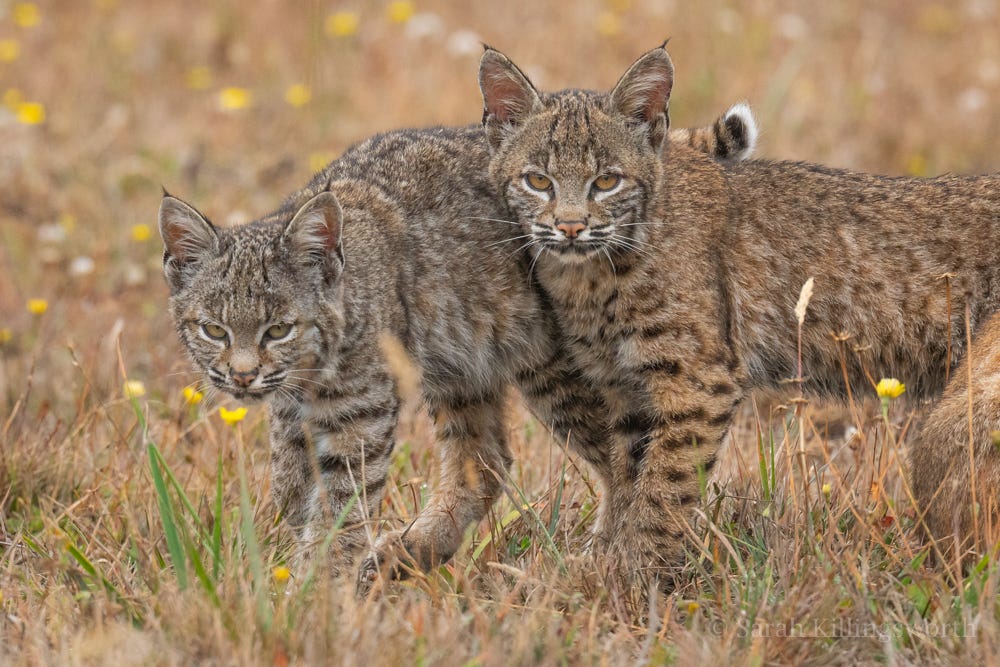
As you approach the large coyote brush where the kittens had been playing, there is no sign of them. You pace back and forth in front of the bush, hoping they will see or smell you. Still holding the gopher in your teeth, you call out to them from the corners of your mouth, telling them to come to you. Nothing. Where have they gone? You move quickly, anxiously pacing along the edge of the brush, calling out while still clenching the meal in your jaws. They must have woken up and and moved. But where? As you approach a strand of willows, you hear movement in the branches and look up to see one kitten snoozing in a tree, while the two others are swatting at each other’s tails at the base. You call again, and this time all three of them run towards you, stumbling over each other trying to be the first to get to you. The largest kitten gets to you first and grabs the gopher as you drop it to the ground. The other two kittens start to chase him, hoping to get some of the food. A tug-of-war ensues, and two kittens end up with parts of the gopher.
The kitten who doesn’t have any food comes running towards you, rubbing her face up against your body and chin. You rub your head against hers, savoring the sweet nuzzling. Noticing her forehead has bits of lichen on it from the willow, you begin grooming her. First cleaning her face, then her body. The other two kittens, satiated, come running over as well, so you clean the tops of their heads and then their backs. Simultaneously, all three kittens take turns licking your head and stomach.
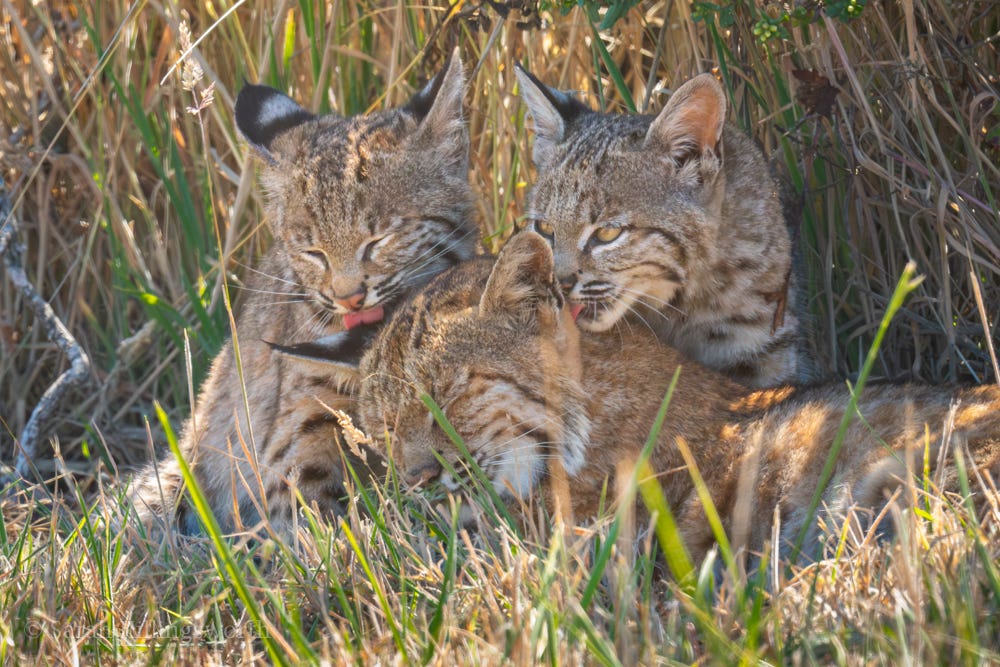
You check each of them for ticks, woody debris and dirt in their fur, then sink down next to them for some well-deserved rest, and they eagerly climb onto your side and flop down beside you to nurse.
After an hour and a half of sleep, you will get up and go back out to do it all again.
I just listened to you speak and do a reading on project Coyote webinar.
My heart is full of gratitude to your respect of the non human animals you photograph and your storytelling. Your ethical practices are wonderful. I can’t believe I haven’t known you before today. I am now a forever follower and admirer! Thank you
Beautiful :-)